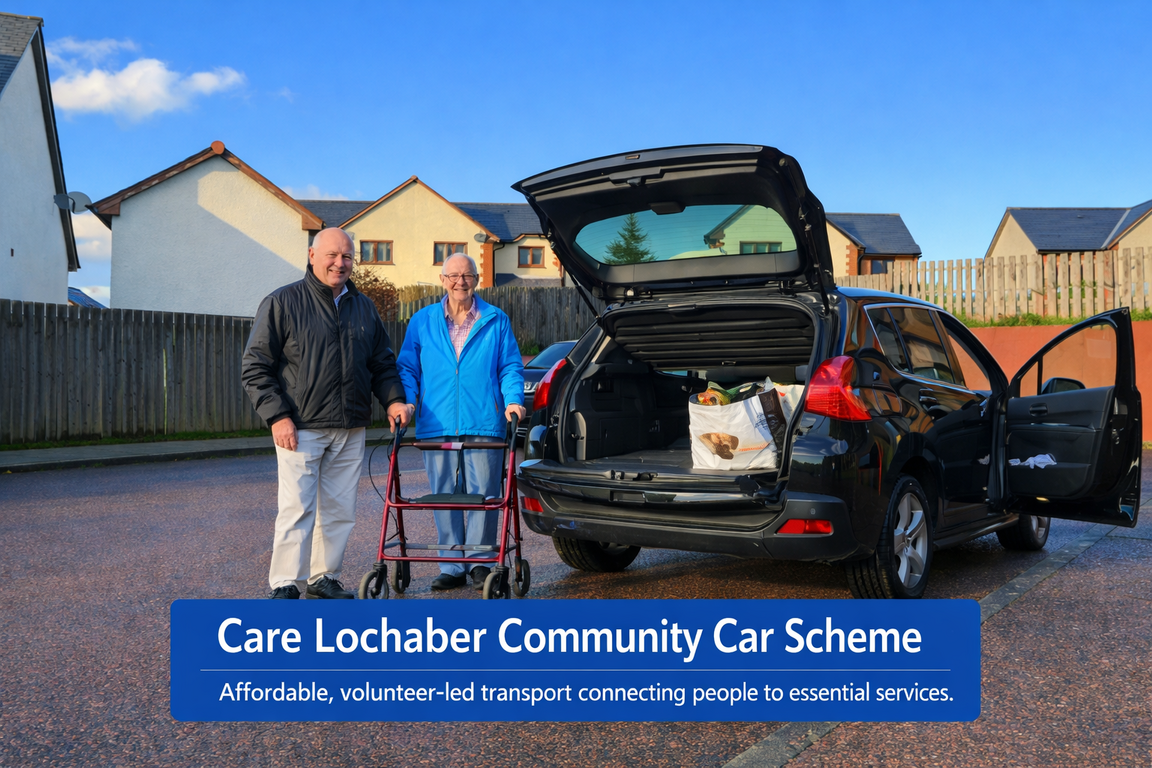
A Volunteer led Transport service providing affordable, do-to-door journeys for people in Lochaber who face barriers accessing essential services.
Estimated Cost
£89,000
Full Project Details & Description
The Care Lochaber Community Car Scheme provides affordable, door‑to‑door transport for people who cannot access public transport across Lochaber. The service supports older adults, disabled people, young adults with learning difficulties, carers, people with long‑term conditions, or short-term conditions, and residents in remote rural areas who face significant barriers reaching essential services.
Funding will help us reimburse volunteer mileage, coordinate bookings, support 15-20 volunteer drivers, strengthen safeguarding, and cover essential operational costs such as rent, insurance, telephones, accessibility aids, and monitoring. It will also allow us to expand more to outreach areas, so isolated residents know the service is available.
Lochaber’s geography and limited public transport mean many people experience isolation, missed medical appointments, and reduced independence. The scheme provides a trusted, flexible, volunteer‑led solution that directly supports priorities in the Lochaber Area Place Plan, including improving access to healthcare, reducing isolation, strengthening community‑led services, and supporting people in remote areas to stay connected.
The project will deliver clear benefits: improved health and wellbeing, reduced loneliness, greater independence, financial relief, and stronger community cohesion. Volunteers provide not only transport but reassurance, social contact, and a vital link to community life.
We have an established volunteer team, safeguarding processes, and operational systems already in place. Next steps include recruiting more volunteers, expanding coverage to more rural areas, and strengthening partnerships with NHS Highland, social care teams, and community groups, with whom we already have contact with.
The Community Car Scheme is an ongoing project and without this service, many residents would face significant hardship, poorer health outcomes, and increased social isolation.
The scheme is a lifeline for those who have no other transport options
We are funded by Highland Council for £40,000 of our expenses, but this does not include the Volunteers Drivers Expenses. We have to raise the rest of the funds, to keep the service running.
.png)
Most voted