Growing2gether builds the mental health, life skills and educational engagement of young people by connecting them to their community as a mentor to a child in an Early Learning Centre.
Estimated Cost
£230,000
Full Project Details & Description
We will build the mental health, life skills and educational engagement of young people from 8 Highland communities (Inverness/Alness/Tain/Thurso/Kingussie/Fortrose/Nairn/Dingwall). Growing2gether Nursery is a partnership between a secondary school and local nursery. Teachers select young people using our `at-risk' tool, which highlights poverty, poor mental health and educational disengagement. Young people choose to participate/we gather parental consent.
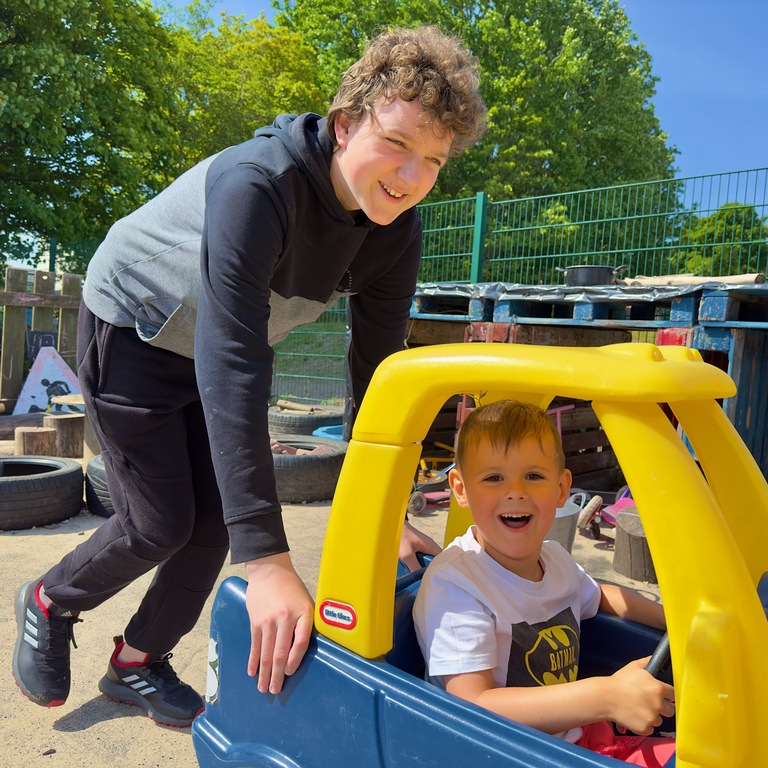
Each 16-week programme, led by 2 facilitators, involves 8 young people (aged 13-16) mentoring 8 children with social/communication challenges (4-6).
Young people mentor their child in nursery for 1.5hrs/week. Giving back as a volunteer in a team with peers builds confidence/resilience as they see the children develop. The young people then attend 1.5hr sessions on emotional/social skills (self management/relationships) and are coached by facilitators to apply lessons learnt mentoring to their own lives.The programme leads to an SCQF Level 4 Personal Development qualification (Self in Community/Self Awareness) accredited by the University of Highlands and Islands. This helps young people re-engage in education/builds life skills. We signpost to follow-on support (e.g., Developing the Young Workforce/Saltire), based on individual needs. The programme ends with a Community Celebration, building pride.
We support young people impacted by poverty, living in deprived/rural communities with few opportunities. Over 70% have Adverse Childhood Experiences (e.g care experience). Many are truanting/have social emotional problems and are at high risk of poor mental health.
Growing2gether Nursery was co-developed with young people/schools/parents/Highland Council. 86% of young people thought mentioring a child would build confidence; 73% wanted a personal development qualification (270 young people). Consultation showed a gap for an intensive group-based programme to meet the needs of disengaged young people.
We are the only Scottish charity to use transpersonal/positive psychology, coaching young people to recognise their unique strengths, manage emotions and create positive relationships in supportive small groups. This ensures they attain at school, gain work and avoid negative behaviour. "Growing2gether differs from other interventions in its immersive approach to learning. The experience of mentoring children gives participants a sense of purpose. It's proactive support, reaching young people who don't engage with more formal systems." Head Teacher.
Highland Council's Integrated Services Plan emphasises early intervention, mental health support and educational engagement for young people. Area Place Plans cite talent drain, poor youth employment prospects/opportunities and the importance of mental health support/volunteering. Our early intervention improves young people's mental health through a positive mentoring work experience, building life skills and increasing life chances.
To improve programmes, we consult with local communities (surveys/meetings/Local Panels). We train Youth Development Officers/school staff to co-deliver the programme, building sustainability/lowering costs. Through our Youth Leadership Board, young people highlight concerns about mental health/bullying poor opportunties, recognising how Growing2gether has helped them. Young people can join our follow-on Growing2gether Community programme, allowing them to create their own youth-led commuity projects.
We monitor impact using pre/post questionnaires, robust research tools and case studies/quotes from young people, teachers and parents.
1: Improved mental health
Facilitators use transpersonal/positive psychology to mentor the young people to change the way they see themselves. We highlight their strengths/skills and potential, using real examples from their volunteering. "At the start I was so shy I wouldn't talk to anyone. I don't like doing stuff in front of people because of my anxiety. I ended up dancing." Bob, 14.
2: Improved employment/education skills
Young people gain work experience in a nursery and learn life/work skills, e.g. teamwork/empathy, through an accredited qualification, building aspiration for education/work. Highland Council long-term tracking proves 93% reach a positive destination (further education/training/work). "Growing2gether supports community inclusion for disengaged young people, increasing their chances of gaining work/building resilient communities," Bernadette Cairns, Principal Educational Psychologist, Highland Council.
3: Increased community engagement
Mentoring a child in a team helps young people connect to their community/practice new relationship skills/behaviours. "I remember walking in and seeing the children's faces light up. This has given me more opportunities, skills and a feeling of belonging." Georgia, care experienced, 13. Many young people return as a volunteer to nursery; the experience gives them skills to work in Early Years.
We also strengthen the skills of the children. ELC Teacher: "The mentoring has increased their self-confidence. They build positive bonds with the young people."
Since January 2017, we have reached 3000 young people/children (24 schools) across Highland (+Moray/Aberdeen/Dundee), achieving a 30% pre/post mental health improvement; 85% gained an SCQF qualification. We have long-term relationships with schools and Highland Council (MOU - evaluation/child safegarding training).
Highland represents 75% of our operations. Our 8-strong facilitator team/experienced management can deliver across multi Highland locations. We source funds from Trust/corps/government, seeking at least 50% from other sources: £8950 (including 2 of our facilitators); £2000 (for management/evaluation once school/LA facilitators trained).
We run 2 cohorts a year (Aug-Jan and Jan-Jun). We complete evaluation 2 months post project (March/Aug).
.png)
Most voted