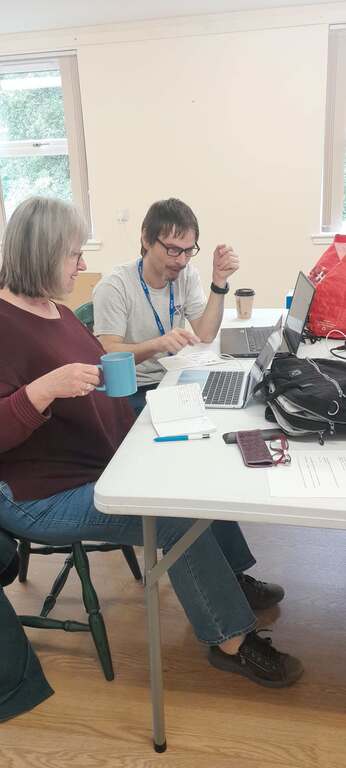
Digital support in Rosehall Village Hall; taking support to the doorstep.
Proposal code
THC-2026-06-164
Summary
We would like to establish The Lairg Tech & Digital Support Hub, with a part-time Digital Inclusion and Support Officer and an apprentice, funded by a local scheme.
Estimated Cost
£77,000
Full Project Details & Description
The Lairg Tech & Digital Support Hub, would be based in Lairg & District Learning Centre, and respond directly to the need we are seeing across Caithness and Sutherland. It would be a low cost and/or donation model.
We are looking for funding for a Digital Inclusion and Support Officer (contribution to salary) and a contribution towards a 17.5 hour a week Digital Technology Modern Apprenticeship (SCQF Level 6). This post will be part-funded by a £6K grant from The Kyle of Sutherland Apprenticship Scheme, which we are in the process of applying for.
The hub will provide:
drop-in sessions where people can come in and get help there and then
one-to-one support for anyone struggling with devices or online services
a practical repair service for broken laptops, tablets and phones
refurbishment of devices so they can be reused rather than thrown away
support with everyday digital tasks like passwords, online banking, shopping, job applications and accessing health and council services
outreach into places like Tongue and surrounding rural villages, based on need and demand
Our recent Scottish Government Digital Inclusion project, Connecting Communities, has shown just how much need there is across Lairg, surrounding rural villages and remoter areas of Sutherland and Caithness. It completes in July 2026.
Over the past nine months, we've delivered outreach workshops in 6 rural communities, we’ve seen the same thing again and again. People are being left behind in an increasingly digital world. Not because they don’t want to engage, but because:
they’ve lost confidence
they feel anxious about security and being scammed.
everything is now online, with little alternative
and there is nowhere local to turn when things go wrong, from a trusted local person in a trusted local organisation and in person.
We’ve also seen people on very incomes ready to throw devices away because they appear “broken”, when often they can be repaired quickly and affordably, and have been.
This all links directly to wider regeneration priorities in rural Sutherland, keeping people connected, supporting independent living for an ageing population, and making sure essential services remain accessible to everyone, not just those who are confident online.
The impact of this work is practical and immediate. It will mean:
people gaining confidence with everyday digital tasks instead of avoiding them
less isolation, especially for older people who rely on digital contact with family and services
real savings for households through repair instead of replacement
fewer devices going into landfill, reducing electronic waste,
better access to essential services like banking, NHS, council services and shopping
local job creation
a real opportunity for a young person through an apprenticeship
Our Connecting Communities project has effectively been a pilot, and it has proved the need is real and ongoing. Our centre has also been recognised by The Highland Poverty and Equality Commision; we are a "Bright Spot".
Over the funded period we have:
delivered digital inclusion support across rural Sutherland communities
built trust with people who would not normally ask for help
provided hands-on device repair and refurbishment
supported people with real-life tasks like banking, passwords and online services
shown that face-to-face support makes a huge difference in confidence
What has become clear is that demand is not reducing, it is increasing.
Our vision is
to establish a low cost or donation model Lairg Tech & Digital Support Hub as a permanent base
to recruit support a Digital Inclusion and Support Officer
to bring in a local apprentice and build skills and employability locally.
to continue outreach into surrounding villages where need is greatest
to expand repair and reuse work so fewer devices are wasted
If funding is secured, we would aim to start in Autumn 2026 and run the project for 2 years, allowing time to recruit and set up properly and for the apprentice to complete their training.
.png)
Most voted