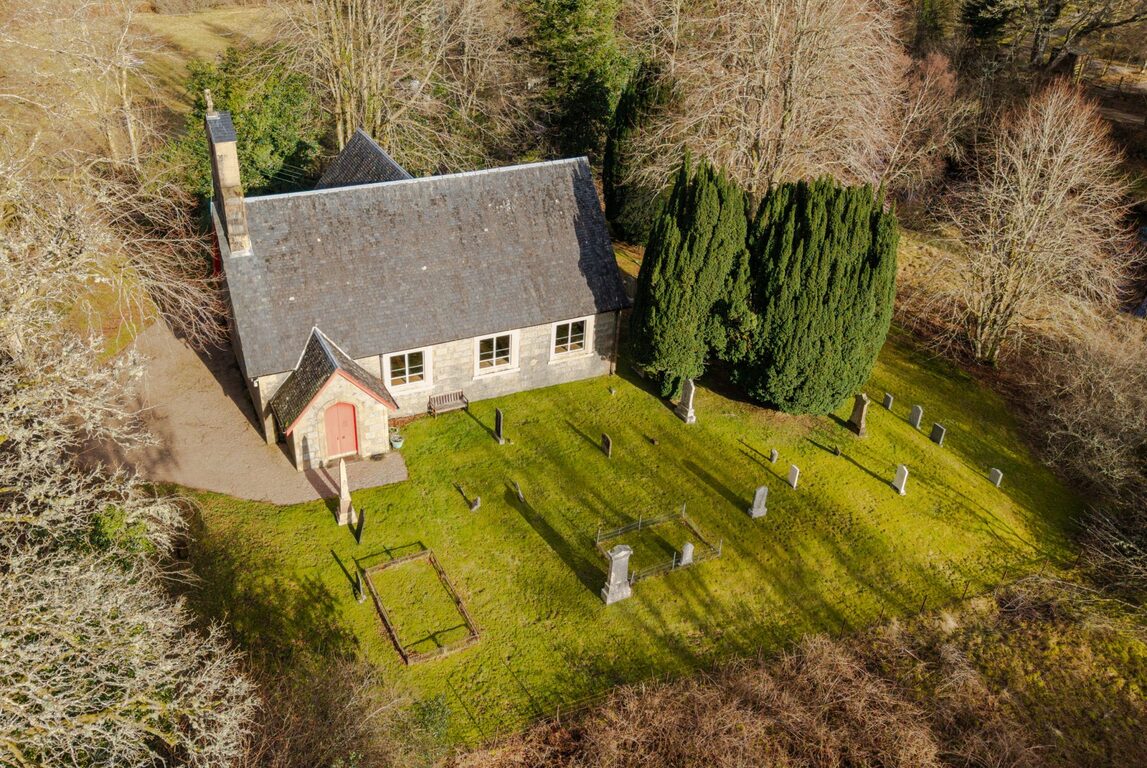
The Sunart Heritage Project will transform the former church into an accessible community heritage hub, preserving local history while creating a welcoming space for exhibitions, learning, events etc.
Estimated Cost
Not yet known
Full Project Details & Description
1. What do you want to do?
The Sunart Heritage Project aims to transform the former church in Strontian into a sustainable, accessible heritage and community hub that preserves and celebrates the history, stories and culture of the Sunart area. The building has been purchased by the community to secure its future and create a lasting asset for local people and visitors.
Funding is required to support the next stage of development, including:
• A full condition and structural survey of the building to identify priority repairs, conservation requirements and future restoration needs. We have applied to the Archtectural Heritage Fund for this and are awaiting to see if we are succesful.
• Development of a detailed business plan, feasibility study and project delivery plan to ensure the building can operate sustainably long term.
• Professional architectural and specialist heritage advice to guide restoration and adaptation works.
• Preparation of applications for statutory consents and permissions required for works to a historic building.
• Development of plans for creating a secure archive and heritage storage area to protect local photographs, documents and artefacts.
• Design and creation of exhibition areas showcasing Sunart’s natural, social and industrial heritage.
• Development of flexible community spaces for meetings, workshops, talks, exhibitions, learning activities and cultural events.
• Improvements to accessibility, including accessible facilities, to ensure the building is welcoming and usable by everyone.
• Creation of income-generating opportunities, including heritage activities, events, exhibitions, volunteering programmes and visitor experiences, helping the project become financially sustainable.
The project will bring together local history, community activity and visitor engagement in one central location, ensuring the building continues to serve the community for generations to come.
2. Why is your project important for your community? Please include details of how your project aligns with your Area Place Plan
The Sunart Heritage Project is important because it responds directly to the needs and aspirations of a rural community that is passionate about protecting its identity, reducing isolation and creating opportunities for people of all ages to connect.
Sunart has a rich and distinctive heritage, shaped by generations of local families, forestry, crofting, fishing, industry, Gaelic culture and the natural environment. However, much of this history is currently held in private collections or stored in unsuitable conditions, making it vulnerable and difficult for the wider community and visitors to access. This project will provide a secure, permanent home for these important records and stories.
The former church is a significant historic building at the centre of Strontian and has played an important role in community life for many years. Bringing it back into active use will preserve a valued local landmark while creating a flexible space for future generations.
The project strongly aligns with the Sunart Area Place Plan priorities by supporting:
• Community wellbeing and connection – creating a welcoming gathering space where people can meet, learn new skills, share memories and reduce social isolation.
• Culture and heritage – protecting and promoting Sunart’s unique history and ensuring local stories are recorded and shared.
• A sustainable future for the area – creating opportunities for volunteering, education, tourism and community-led enterprise.
• Inclusive access and participation – ensuring people of all ages, abilities and backgrounds can take part in activities.
The project complements existing community initiatives, including the Sunart Community Craft Hub and Men’s Shed, by providing additional opportunities for creativity, learning and social connection.
3. What positive impact will your project have? Tell us about the outcomes you expect
The project will deliver significant social, cultural and economic benefits for the Sunart community.
Expected outcomes include:
• A stronger, more connected community – providing a safe and welcoming place where residents can meet, share experiences and build friendships, helping tackle rural isolation and loneliness.
• Preservation of local heritage – safeguarding archives, photographs, artefacts and memories that tell the story of Sunart and ensuring they remain accessible for future generations.
• Increased participation and volunteering – creating opportunities for local people to contribute their skills, knowledge and time, strengthening community ownership.
• Learning opportunities for all ages – supporting schools, families and visitors to engage with local history through exhibitions, talks, workshops and activities.
• Support for wellbeing – encouraging social interaction, creativity and lifelong learning, all of which contribute positively to mental health and quality of life.
• Economic benefits – attracting visitors, supporting local businesses and contributing to sustainable tourism through heritage activities and events.
• A sustainable community asset – creating a building that can generate income through activities, events and partnerships, reducing reliance on grant funding over time.
The project will ensure that the heritage of Sunart is not only preserved but actively used as a resource to strengthen the community today and in the future.
4. What key milestones have you achieved so far and what will your next steps be?
The project has already achieved several significant milestones through strong community commitment and support.
Community Engagement & Support Evidenced
The project has received considerable local support, with the community recognising the importance of saving the former church and creating a shared heritage space. Local people have contributed ideas, memories and encouragement, demonstrating a strong desire for the building to have a meaningful future.
Project Plan/Feasibility/Business Case Created
Initial project planning has been undertaken, identifying potential uses for the building, including archive storage, exhibitions, community meeting space, educational activities and cultural events. Work is continuing to develop a robust feasibility study and business plan.
Necessary Consents Obtained
The project team is engaging with relevant heritage and planning bodies to understand requirements and ensure all future works are appropriate for the building’s historic significance.
Quotes Obtained
Professional advice and quotations are being gathered from relevant specialists, including building consultants and heritage professionals, to establish the scope, costs and priorities for restoration.
Funding Applications Submitted
The project has begun seeking external funding support and has engaged with Achitectural heritage funding organisations to progress the development phase.
The next steps are to complete the building surveys, finalise the business plan, secure development funding, obtain necessary permissions, appoint professional support and move towards restoration and opening the building as a fully operational community heritage hub.
5. What is your anticipated start date/end date
The anticipated start date for the development phase is Autumn 2026, subject to securing the necessary funding and completing surveys and planning requirements.
The project will be delivered in phases, with the initial development, feasibility and design work expected to take approximately 12 months. Restoration and conversion works will follow, with the aim of opening the Sunart Heritage Hub as a fully functioning community facility within 2028.
The phased approach will allow the community to continue engaging with the project, build volunteer involvement and ensure that the final facility is sustainable, accessible and designed around local needs.
.png)
Most voted