We will use the regeneration of a lost local craft to develop skills within our community, provide opportunities for heritage engagement and tackle social isolation.
Estimated Cost
£75,000
Full Project Details & Description
What we want to do
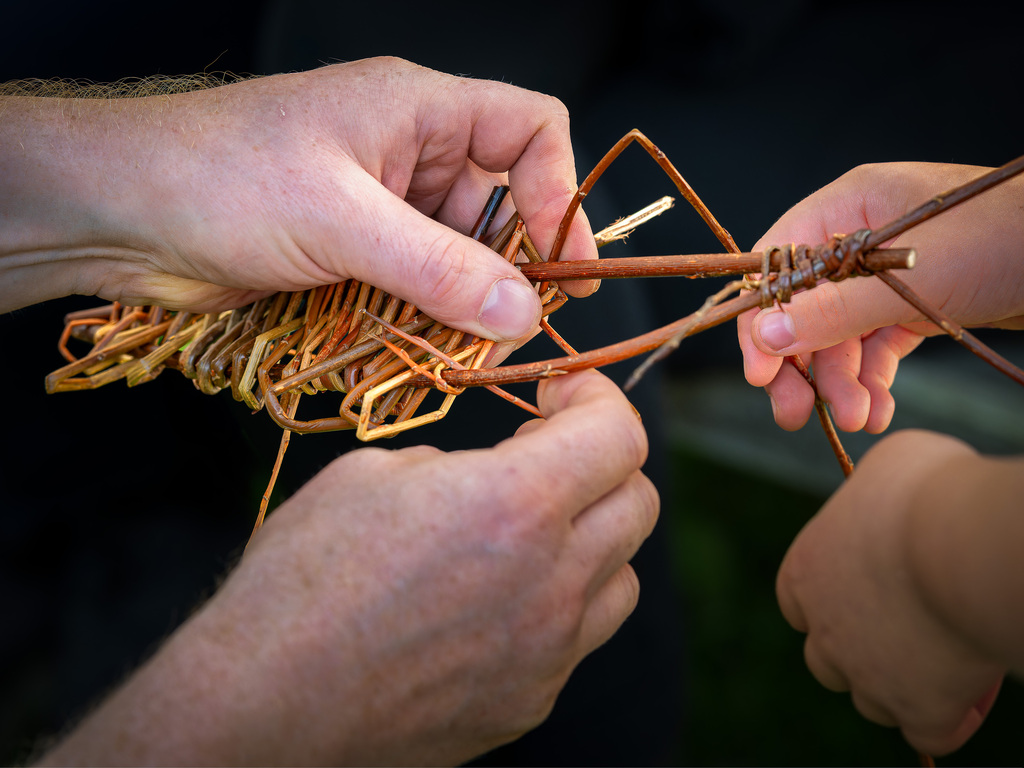
Wicker fender weaving is an extinct heritage craft. Using the wicker fenders in our museum collection and the support of a local basket maker we will re-learn this highly skilled craft as a community and capture the process of re-discovery with an exhibition that can tour around coastal communties in the Highlands and a high-impact documentary film. This project will engage a skilled weaver to help us re-learn as a community how wicker fenders (which hang on the sides of boats to minimise contact with harbour walls) are constructed, woven, and maintained. Through flexible, community-based workshops in the form of open sessions we will weave new, intergenerational connections to help combat social isolation by collabourating creatively. Basket weaving is the ideal medium for this project as it is accessible, creative, and cross-generational.
The funding would be used to contract a weaver to undertake the research and deliver workshops, as well as appointing a local community engagement officer to help us better connect with hard-to-reach local audiences. Following the learning and community-led making of new fenders, the project will feature a test pilot on a real boat in Cromarty harbour, right at the heart of our community.
To support equitable community engagement, we will offer participants lunch and refreshemnts throughout workshop days. Participants will gain tangible skills in return for their time.
In order to record the skills and knowledge gained from this project we will commission a short documentary-style film to capture the process, including the learning and research stage, community workshops, harbour testing, and outcomes. We will also develop a co-curated exhibition to be displayed both inside the museum, and in key hubs within the community. The exhibition and accompanying film will be available to tour other coastal Highland museums.
Funding will also be allocated to administration, curatorial time for documentary management and exhibition development, and marketing to promote engagement before, during and after the project.
This would be a 12 month project.
Why this project is important to our community
Our community suffers from social isolation and a lack of community connection, evidenced by a geographic access domain rank in the SIMD of just 2/10. This demonstrates that it is difficult for our community to access essential services, contributing to social isolation, a lack of economic development, and overall deprivation. We have a strong track record if engaging with both our younger and older communties through regular events with our local Youth Cafe and partnerships with the Four Ways Club (a weekly group for older people). We would like to use this project as a way to nurture intergenerational connection, collaboratively upskilling young children, teenagers, and older people through learning and creativity. The workshops will promote family-friendly learning that does not exclude any groups or ages, using weaving as an adaptable medium that can engage as many people as possible.
Using basket weaving as a vehicle for connection, our whole community will be able to contribute to the restoration of a significant part of our intangible cultural heritage: learning, sharing and restoring this knowledge for future generations. This fits with the heritage aspects of the Local Place Plan along with creating a new tourism offer through the exhibition and film.
Positive impacts
As well as building cross-generational connection and addressing social isolation within our community, re-learning a lost craft, and developing creative and STEM skills this project will highlight how sustainable materials can be an alternative to plastic. The project will produce new learning around the wicker fenders, different test examples as we undertake action learning, a touring exhibition, and a short film.
Key Milestones
We have developed the project concept in detail, have approached the Cromarty Harbour Trust to agree their support for the pilot testing of the community woven fenders, and have tentative agreements from other Highland museums to host the touring exhibition. We have quotes for the work so would be able to start quickly once funding is obtained.
.png)
Most voted